
With good reason Madrid is heralded as the European Capital of Art (who knew?). Its three museums: the Prado, Reina Sofia and Thyssen, house a staggering number of masterpieces from almost every important artist of the past 1000 years. All centrally located within walking distance of each other in the Paseo del Arte, the collections include works by Van Gogh, Picasso, Goya and Bosch.
Visitors can buy a “Paseo del Arte” ticket at any of the museums which gives discounted entry to all three gems. Our hotel, Hotel Selenza, bundled an unlimited entry to the three museums with our hotel stay.
We stayed in Salamanca, an old, elegant, quiet and urbane neighborhood known for its chic boutiques and charm. Apparently, the neighborhood is pricey and exclusive and clearly where wealthy Madrilenos live. Hotel Selenza is a boutique hotel with 40 rooms and contemporary art deco decor.
THURSDAY


The lobby


Our room and its great details


The library, where we had afternoon drinks
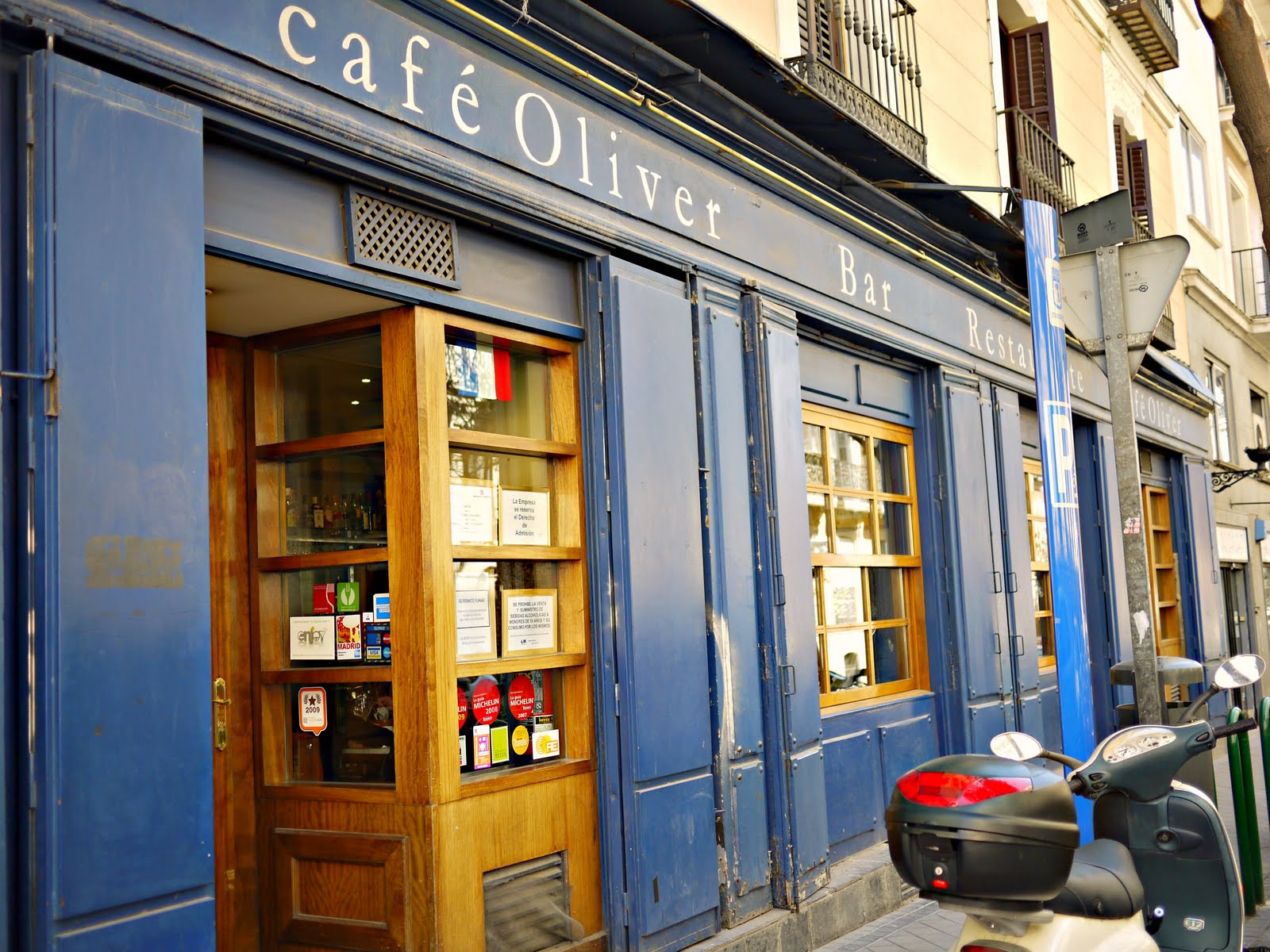
We arrived around 7 am Thursday, having taken the new Aer Lingus direct afternoon flight from DC Wednesday. The hotel was kind enough to give us a room, albeit small (the only one available at that moment--check in is typically 3pm), right away. They said we could move the next day if we liked (which we did). So we took a nap, refreshed ourselves and got up around 2pm to go for lunch. It was perfectly aligned with how the Spanish spend their days: a siesta and then a late afternoon lunch. Here we are at Cafe Oliver, looking very groggy.
Cafe Oliver, located in the artsy and gay neighborhood of Chueca, is a great little place that serves up the best from the French, Italian, Spanish, and Morroccan cuisines in this Bistro-style restaurant. Very local and very friendly. Not a tourist in sight and English is spoken in very limited amounts. Perfect.

Bacalao (salted, dried cod) rehydrated with some milk and shaped into a cake with peas. Bacalao is very popular and a food staple. Yum.

G had Iberico ham a melon

A bit of roast chicken with mustard sauce and a potato topped with cheese. (You'll note two things: 1) I'm eating chicken here, which I never do in the States and 2) it's a very small (not a raptor-sized US) piece of chicken. The taste is markedly different from American chicken--somewhere between duck and chicken. Delicious.

G had a shrimp and pasta dish that was tinged with curry. There was also some nice cava, rice pudding, and a little espresso involved.

We walked around Chueca and wandered towards Retiro park, Madrid's main park (there are many) in the city center. A giant park, reminiscent of New York's Central Park, filled with beautiful sculpture, a green house, monuments, galleries, a peaceful lake and host to a variety of events, it is one of Madrid's premier attractions.


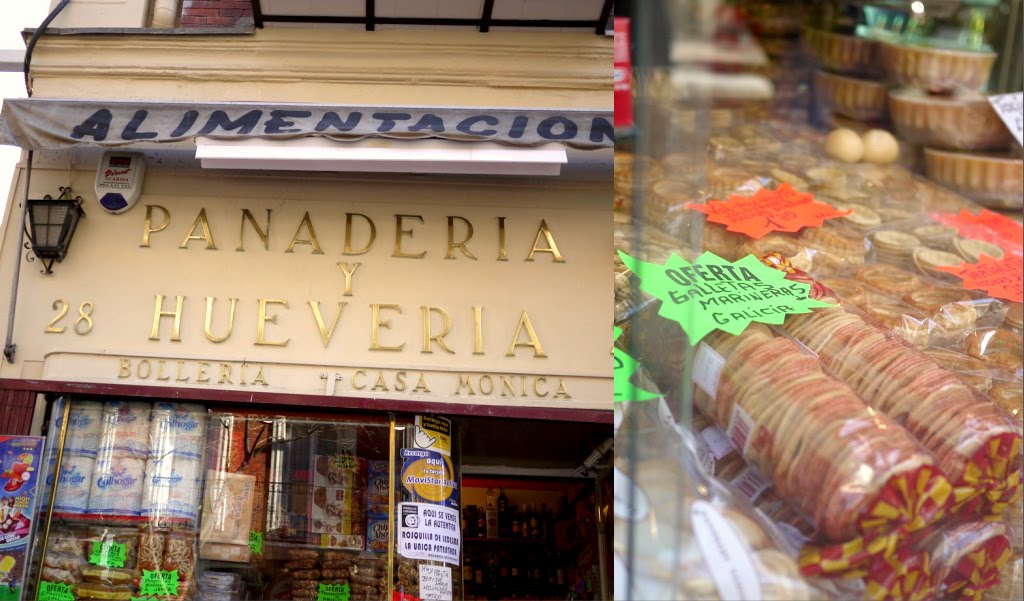
Afterwards, we walked back to our Salamanca neighborhood and stopped in at the tiny panaderia (bakery). There's also a mercado (think farmer's market) right around the corner from us as well.


We took another nap before our dinner in the neighborhood at Lateral, a chic new tapas bar around 9:30 that night. (People eat late there.)


Madrid has undergone a bit of a metamorphosis in the past twelve years since I've been here. The mayor has undertaken a grand effort to make the city walkable and more international and visitor friendly. Chic and sophistie bars and eateries like Lateral are now everywhere, supplanting some of the more divey or traditional taverns.


A baked potato...topped with a fried egg (they love their fried eggs), stuffed with ratatouille. DELISH!

Mushrom crepe

(from top left clockwise): Tortillia española (a traditional frittata/omelet with potatoes and onion); ever-present shrimp croquettes; foie gras with marmalade and Iberico ham; tempura veggies (an international twist on the classic fried anything)

A bit of lemon pie and sorbet of mango and raspberry
We went to bed with very full bellies!
FRIDAY
The next morning we got up around 10am to have breakfast and head over to our first museum--the Reina Sofia.
The Centro de Arte Reina Sofia houses Madrid’s collection of modern art in a huge exhibition space converted from a hospital housing Spain’s most famous work of art – Picasso’s Guernica. Picasso’s masterpiece shows the Nazi bombing of Guernica in 1937 during the Spanish Civil War. Due to its depiction of the atrocity under Franco, Guernica was displayed in New York until 1981. After Franco’s death in 1975 and the end of his dictatorship in Spain, Picasso’s work returned home. The adjacent galleries show the preliminary sketches by Picasso. Apart from several other works by Picasso, there are paintings by the French artist Magritte, the surrealist Salvador Dali, and a large collection of photography including photographs taken by Robert Capa during the Spanish Civil War.
There were amazing displays of other non-Spanish artists, including Schutte (aluminum sculptures) and Calder (mobile). The space itself is wonderful with a giant atrium with industrial elements. A mix of classic on the outside with contemporary on the inside.


We then walked over to beautiful Plaza Santa Ana and had a little lunch of kebabs and fries (they love their meat and patatas fritas!) and some flan. Leisurely lunches on sunny terraces, people watching, was by far my favorite thing to do while in Madrid. And the sidewalk cafes were plentiful.

After lunch, we did the obligatory walk over to Plaza Mayor, the giant and very popular square in the middle of the city. It's over-run with tourists and concommitant mimes and pick pockets, much like Times Square or Plaza San Marco; and is where you'd find a lot of kitsch and crappy things to buy. We walked through it quickly.

Plaza Mayor
And afterwards, what else: nap time back at the hotel! Before dinner, we snapped pictures of the lovely courtyard of the hotel, which also houses Ramon Freixa, the one Michelin-starred beauty, that Gourmet magazine describes as "delirious excess".


Gold charges, black water goblets, and crackers on a hanger (inspired by Chicago's Alinea--which I still have to blog about).

Amuse bouche of the TINEST bits of potato puree in tapioca skin; spherified foie gras; Parmesan cloud with salmon roe; sweet pea with candied marshmallow bits; braised pork belly with candied pineapple and some edible goldleaf

Fish course: Cod sous vide with a bit of crispy skin and purple basil

A rioja and some cava

A meat course?:
A FANTASTIC deconstructed hamburguesa (hamburger): Ground duck with grated clouds of parmesan, green mustard savory ice cream; tomato and molasses sauce (aka ketchup) and the thinnest wheat cracker.

My main course: Sea bass; potato skin (not skin of potato, but a sliver of potato with the texture of...skin) and the most delicate julienned herico verts.

A side of potato pudding, a bit of spinach with a sliver of leek and the tiniest cube of apricot gelee

G had pork cheeks, braised; with corn three ways: grilled sliver of baby corn, POPCORN, and corn pudding

A floating rose and chef Freixa himself! He was very gregarious, spoke decent English and worked the room often

PRE-DESSERT!: Pumpkin sorbet; lavender pillow puff; chocolate-covered POP ROCKS in a white chocolate cup; raspberry gelee; bluberry stabbed with a tuille; tiny madeleine; and, literally, a golden (gilded) crab apple


Dessert: Dark chocolate ganache cake; chocolate and hazelnut ice cream; cold chocolate (aka, like a Mexican hot chocolate, but cold and without sugar with a thin waver on top). Then six different types of chocolate bits with our espresso: chocolate covered almonds, chocolate-covered sour patch kids (not actually sour patch kids, but a similar type of ultra pucker-worthy candy that Spanish kids eat), chocolate-dusted coffee beans and white chocolate balls and salt. Oy!

G finished everything off with a Cognac.
Note: as part of the hotel package, we got to have dinner at this amazing restaurant for half of what it would typically be ($250 versus $500). Though "packages" and "bundles" may sound down-market, it certainly can be the opposite, and great value.
SATURDAY
The next morning, we had the usual breakfast at 10am that included baked goods, coffee and juice.

We walked over to the fabulous Thyssen museum for our daily art intake.


Juan Gris, El Fumador, 1913
The Thyssen, aka, the Museo Thyssen-Bornemisza is a huge assemblage of art collected by the Thyssen-Bornemisza dynasty. The works on display cover examples of great art from all over the world. There are works here by almost every major artist of the past 600 years; Raphael, Titian, Canaletto, Monet, Renoir, Gauguin, Rodin, and Vincent Van Gogh all have paintings here. More modern works by Freud, Bacon, Pollock, Lichtenstein and Picasso are also on display at this immense private treasure-trove. Amazing.
For lunch, we walked back to the edge of our neighborhood and ate at Iroco. Yet another, slick, nouvelle cuisine establishment, it's decorated in a very familiar slick, trendy New York style. It seemed to be popular with a lot of Americans. The menu is not particularly Spanish, but very tasty. I wish a garden table was available--but indoors was nice enough.


Sliders and fries.

A panko and sesame-crusted scallopini of chicken Cesar salad
After lunch: The usual, a siesta...

For dinner, we made an ill-advised trip to El Mollette, an overly hyped, overly romanticised dive serving greasy racionnes and terrible wine in a really crappy part of town on a dumpy street. However, the owner, Tomas Blanco is a wonderful and friendly man. The reviews and at the urging of a friend, made it sound like it was difficult to get a table in the 20-some seat eatery. We got there early, around 9pm, got a prime (relatively speaking) seat on the top floor and Tomas helped us choose our platas. They were not good. They gave me heartburn. The only thing I could surmise from the overly positive reviews (like "the best place in Madrid to eat") is that the reviewers' lifestyle vernacular includes hostels and dive bars.


Avocado salad with cured salmon and tuna; more croquettas; huevos roto (aka "broken [fried] eggs" on top of french fries!; fried chorizo on top of more french fries! We at a fraction of this meal and high tailed it out of there.
Again, the service was very friendly and mom and pop who run the place are the sweetest people. I hope they do well, and hey, it's not bad if you want a cheap, greasy, fun meal one night. We mad the excuse of having to catch the big futbol match (Madrid v. Barcelona) that night! So we walked out, and popped our head in a local cerveceria to catch a glimpse of the game.


We headed towards the more urbane Mercado de San Miguel, a really remarkable foodie food paradise (like Eastern Market, in DC, but on steroids), and wished we had just gone here for dinner. Everyone held plates full of tapas and bruschettas.
Since May last year, Madrid’s foodies have been flocking to a rather more alluring (if pricey) alternative to the city's utilitarian municipal markets. El Mercado de San Miguel is the Spanish capital’s first, and so far, only, “gourmand” produce market. The feel is that of a southern European version of Borough Market in London. There are 33 upmarket stalls, housed in a beautifully restored, cast-iron and glass pavilion, just off the historic Plaza Mayor near the heart of old Madrid. Read more about it here.

Poultry stall; oyster stall

Plenty of places to get a drink--it's popular for late night eating and drinking (which is what the Spanish do--eat and drink late), it's open until 2am.


SUNDAY
Our last full day. We saved the Prado for last. Walking along the beautiful park promenade that runs down the center of main drag Pasillo de Recoletos, was a lovely day. Madrid has so many lovely parks and green spaces.


Amassed by the Spanish royal family, the Museo del Prado is one of the oldest and largest collections of art in the world. It boasts hundreds of priceless works of art covering Spanish, Dutch, Flemish, German, Italian, French and British art between 1100 and the 19th century. Among the cavernous galleries at the Prado, masterpieces on display include works by Bosch, Brueghel, Durer, Raphael, Titian, El Greco, Caravaggio, Velazquez, Rubens and Rembrandt - to name but a few. Naturally Spanish art is well represented with large collections by El Greco, Velazquez and Goya. Highlights include; the Black Paintings (Pinturas Negras) by Goya, a wonderfully dark series produced in the 19th century, and the macabre Flemish works by Bosch and Brueghel; The Garden of Earthly Delights and The Triumph of Death.
The Prado is free on Sunday!
On our leisurely walk back, we stopped by the historic Cafe Gijon. It's said to be one of the best literary and artistic cafés in the world. History is of such importance that in fact, the expanded name of the establishment is "Gran Café de la historia de España".
Opened in 1888, it won itself a place in Madrid's political and artistic life quickly by becoming the site of "tertulias" (informal group discussions on everything from art to politics) and also the favored place for scientists, writers and poets searching for inspiration. Among its customers were Santiago Ramón y Cajal (the winner of the 1906 Nobel Prize in Medicine) and later, writers and poets such as Camilio José Cela, Federico García Lorca, Antonio Machado, Rubén Darío and Pérez Galdós.

Speaking of literati, we ran into (okay, sat near) a real life artist and author, Eric Bogosian.


The outdoor dining is actually across the street from the restaurant. So servers had to negotiate traffic when serving up our plates!


More eggs. Scrambled eggs with cured ham on top of fries! Garlic shrimp and a sundae. We lingered quite a while before heading back to our neighborhood, for more...napping. I could really get used to this siesta thing!
Our last dinner in Madrid was again in our neighborhood, at the stylish and funky Pan de Lujo, an ultra contemporary Spanish-fusion restaurant run by acclaimed chef Alberto Chicote. The entrance looks like a clothing store front, but enter and you'll be greeted with a bar area with disco-like floor lighting and a wall of glass opens onto a reflecting pool illuminated by three big light boxes.


The wine list was nice and extensive. Tons of Spanish wines, of course.

Quirky details like a rubber gasket for the olive oil plate and a long napkin the size of a sheet. 

I had to have a salad. And though they aren't the most interesting things on the menu, this one was quite fabulous with pomagranate seeds and asparagus.

G had the most amazing semi-dried tomatoes. Basically, dried tomatoes are rehydrated with oil and with a drizzle of balsamic, they imparted a caramely sweet flavor that was out of this world.


Our main courses included truffle stuffed veal and pork meatballs for me and pork tenderloin in some sort of muscavado sauce for G. Dessert was an amazing matcha ice cream iwth a bit of mint, toasted brioche crisps, and lychee juice!
A perfect end to a perfectly relaxing Madrid long weekend!


 Add six drops of whatever food coloring you want. (I added red drops for light pink and green drops for pistachio green).


